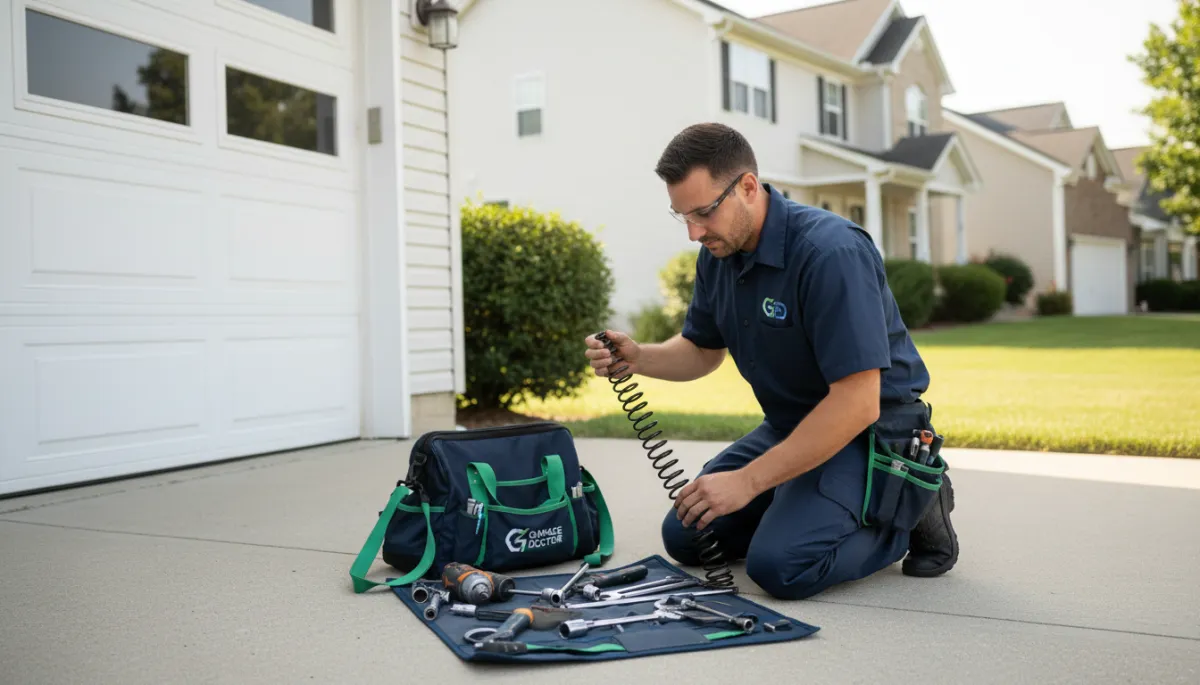
How to Get More Garage Door Repair Calls When Homeowners Need Help Right Now
Garage Door Marketing, Garage Door Repair Leads, Local Service Ads
How to Get More Garage Door Repair Calls When Homeowners Need Help Right Now
When a garage door jams half-open at 7:30 a.m., that homeowner is not “researching options”—they’re looking for whoever can fix it fast and actually answers the phone. If you build your marketing and operations around that reality, you win the call, the job, and often the relationship for years.
1. Garage door is an emergency-first business—treat it that way
You don’t sell “home improvement” first—you sell access and security. When a spring snaps or the door won’t open, three things are usually true:
- Someone is stuck—can’t get to work, kids can’t get to school, car is trapped.
- The home is exposed—door won’t close, security risk, weather exposure, pets can get out.
- Stress is high—this is a “fix it now” mindset, not a “compare quotes for three weeks” mindset.
That emergency mindset should dictate your entire marketing strategy. Homeowners are typing or speaking searches like:
- “Garage door repair near me open now”
- “Same-day garage door spring repair”
- “Emergency garage door won’t close”
Your job is to be the obvious answer in those “right now” moments. That means:
- Positioning: Prominently display “same-day service,” “emergency service,” and real hours on every profile and page, not buried in fine print.
- Operations: Answer the phone fast, or use a real after-hours answering service—missed calls are lost jobs in this niche, especially when homeowners call down the list until someone picks up.
- Messaging: Reviews, website copy, and ads should repeatedly mention fast response, clear pricing, and safety-focused work.
You’re not just competing on price—you’re competing on speed, trust, and availability. The companies that embrace “we are an emergency-first business” build their marketing, staffing, and scheduling around that—and they capture the highest-intent, highest-value calls every day.
2. How Google Local Services Ads work for garage door companies in 2026
Local Services Ads (LSAs) are built for exactly the kind of “help me now” searches garage door companies live on. They sit above everything else—above traditional Google Ads, above the Local Pack—and show your business with a phone icon, reviews, hours, and the “Google Guaranteed” badge if you qualify. Homeowners tap and call. That’s it.
Key points garage door owners need to understand about LSAs today:
- Pay per lead, not per click. You pay when a homeowner calls or messages through the ad—not every time someone views or clicks. For high-intent emergency searches, this model is built to protect your budget while still capturing valuable calls, as outlined in multiple LSA guides from WordStream and others.
- Google Guaranteed builds instant trust. Background checks, license verification, and insurance proof are required, but that green badge is a shortcut to credibility when a stressed homeowner is scanning options. It signals that Google has vetted you, which can be the difference between you and a competitor with similar reviews.
- Lead quality depends on targeting and profile setup. LSAs rely on your service categories, service areas, hours, and reviews. If you don’t clearly mark emergency availability, or your service area is too broad, you’ll get more junk leads and wasted time. If you dial it in, you get more “door stuck right now” calls in the neighborhoods you actually want.
In 2026, Google is moving LSAs into a specialized Performance Max-style format that still keeps the pay-per-lead structure but leans more on Google’s AI to match intent, service type, and location across Search and Maps. For you, that means two things:
- The basics still matter—accurate categories, tight service area, real hours, and active review generation.
- Speed to respond to LSA leads becomes even more critical—Google wants to show providers who actually pick up and follow through.
If you’re not in LSAs yet, you’re likely missing a chunk of the highest-intent calls in your market. If you are in LSAs but not getting volume, the problem is usually profile setup, reviews, responsiveness—or all three. This is where an AI-driven audit and optimization plan can pay for itself fast, especially when it’s tuned specifically for garage door intent rather than generic home services. You can get your free personalized 12-month Growth Plan to see exactly how LSAs should fit into your mix.
3. A local search domination strategy for “near me” and AI-driven results
LSAs are one piece. To really dominate “garage door repair near me” in 2026, you need a layered local search strategy that covers Google, Maps, AI Overviews, and even voice assistants. Homeowners are still starting most searches on Google, but more of them are now asking AI tools and smart speakers for recommendations too. You can’t afford to be weak anywhere in that chain.
Focus on these pillars:
- Google Business Profile (GBP) as your local “homepage.” Many homeowners will never see your actual website first—they see your GBP in the Local Pack or Maps. Keep it fully built out: accurate categories (garage door repair, installation, opener repair), real hours, emergency availability, service area, and service descriptions. Post fresh photos of real jobs regularly and use the Posts feature for promos or seasonal reminders. Clean, consistent GBP data also helps you show up in AI Overviews that summarize local options.
- Review velocity and content, not just count. In local search today, recent reviews carry more weight than old ones. Aim for a steady stream of new reviews every month, and coach customers to mention what actually matters: fast response, honest pricing, clean work, and clear communication. Those phrases influence both rankings and how AI tools describe you when summarizing “best garage door repair near me.”
- Emergency-intent content on your site. Have specific pages for terms like “emergency garage door repair,” “same-day spring repair,” and “garage door won’t open.” Use plain, homeowner language, and answer the questions they actually ask—cost, timing, safety, and what they should do right now. This helps for both traditional SEO and voice search queries like, “Hey Google, who can fix my garage door today?”
- Citation and NAP consistency. Your name, address, and phone number must match across directories, social profiles, and your website. Inconsistent data weakens your local authority and can confuse both Google and AI assistants pulling info from multiple sources.
The goal is simple: when someone in your service area searches or asks any device for garage door help, your business appears in LSAs, the Local Pack, organic results, and AI summaries—again and again. That repetition builds trust before they ever call.
4. Fast response systems that turn panicked calls into 5-star reviews
Marketing gets the phone to ring. Systems turn that ring into booked jobs and 5-star reviews. In garage door, response time is your unfair advantage—or your biggest leak. Industry research across home services shows that leads responded to within minutes convert dramatically better than those left hanging. You feel this every time a homeowner says, “You’re the first one who actually picked up.”
Build a simple, tight response system:
- Always-on call handling. During business hours, someone trained should answer within a few rings—no exceptions. After hours, use either a live answering service or a smart call routing setup that forwards to an on-call tech or dispatcher. Voicemail alone is a revenue killer for emergency work, because the homeowner will just call the next company on the list.
- Instant text follow-up for missed calls and web leads. When you miss a call or get a form submission, an automated but personalized text should go out within seconds: “Hi, this is [Company]. We saw your missed call about your garage door. Are you safe, and can you send a quick photo of the issue?” That one move alone can save a lot of “lost” leads and reassures the homeowner you’re on it.
- Clear, simple booking script. Train whoever answers the phone to follow a short script: confirm safety, get address, get door type, give a realistic arrival window, set expectations on pricing structure (service fee plus parts, or flat rate for common repairs), and confirm they’ll receive a text with the tech’s name and ETA. Consistency here turns chaos into calm for the homeowner and makes your team look professional every time.
Then, connect this operational discipline directly to your review engine. After the job:
- The tech verbally asks for a review while the homeowner is relieved and happy.
- Your system immediately texts a direct link to your Google profile—no hunting, no friction.
Fast response in, fast review out. That flywheel is what pushes you up in LSAs, Maps, and AI Overviews—and keeps the phones ringing without constantly increasing ad spend.
5. Turn one-time repair customers into long-term maintenance and replacement clients
Most garage door companies treat every job like a one-and-done transaction. That’s expensive. You paid to acquire that customer—through LSAs, SEO, or referrals—then you never talk to them again until something breaks years later, if they even remember your name. That’s wasted opportunity.
Instead, use each emergency repair as the start of a long-term relationship. Simple systems can turn panicked first-time callers into reliable, high-lifetime-value clients:
- Collect clean data on every job. Name, mobile number, email, door type, opener brand, and rough age of the system. This is the foundation for every follow-up and future offer. If your techs aren’t capturing this consistently, you’re burning money long term because you can’t market intelligently to that customer later.
- Offer a simple maintenance plan—on-site, not by email later. When the tech is wrapping up, they should present a clear, no-pressure option: a basic annual or semi-annual tune-up plan that includes inspection, lubrication, balance checks, and a discount on future repairs. Keep it simple: one or two tiers, clear pricing, and automatic reminders. Many homeowners will say yes if it’s framed as “keeping your door safe and avoiding surprise breakdowns.”
- Use AI-assisted reminders and education. With a clean customer list, you can use AI-driven tools to send timely, personalized messages: reminders when it’s time for a tune-up, tips before winter or storm seasons, or notices when their opener or door model is reaching typical replacement age. The key is relevance—send messages that feel helpful, not spammy. Precision marketing here keeps you top-of-mind without burning your list.
- Proactively identify replacement opportunities. Every emergency repair is a chance to assess the whole system. When a door is clearly near the end of its life, document it, note it in your CRM, and set a reminder to follow up later with options for replacement—especially if you install higher-margin doors or smart openers. Many homeowners will appreciate a proactive, well-timed quote instead of waiting for the next failure.
This is where AI marketing and automation shine. Instead of relying on memory or manual spreadsheets, you can let systems track door age, service history, and engagement, then nudge you—or automatically reach out—when it’s the right time to talk maintenance or replacement. Done right, you stabilize your revenue and stop living and dying by this week’s emergency calls alone. If you want help mapping this out for your market and price points, you can get your free personalized 12-month Growth Plan and see exactly how a retention engine would look for your business.
FAQs: Real questions garage door owners ask about getting more “right now” calls
How much should I budget for Google LSAs as a garage door company?
There’s no universal dollar amount—it depends on your market size, competition, and how many trucks you want to keep busy. A practical starting point is to decide how many additional jobs per week you want from LSAs, then work backward from your average revenue per job and acceptable cost per lead. Many home service companies end up allocating a significant share of their paid budget to LSAs because they’re high-intent and pay-per-lead, but you should test, track, and adjust rather than copying someone else’s number. The key is measuring booked jobs and profit, not just leads.
Are LSAs better than traditional Google Ads for emergency garage door work?
For pure “my door is broken right now” calls, LSAs are usually the first place to focus because they sit at the very top of the page and run on a pay-per-lead model. Traditional search ads can still work well—especially for non-emergency installs, new doors, or specific brands—but they require more hands-on management and you pay per click whether the person calls or not. A strong setup often uses LSAs for emergency and high-intent leads, then supports that with search ads and organic SEO for broader awareness and non-urgent work.
How fast do I really need to respond to leads to win more jobs?
In garage door, minutes matter. If you consistently respond within a few minutes—by phone or text—you will win a lot of business simply because competitors are slower. When homeowners are stuck or worried about security, they rarely wait around for callbacks; they move down the list until someone answers. Build your systems assuming that if you don’t respond almost immediately, you’re giving the job to someone else. That’s why missed-call texts, live answer, and simple booking scripts are not “nice to have”—they’re revenue protection.
Do I really need a maintenance plan, or should I just focus on repairs and installs?
You can survive on repairs and installs—but a maintenance plan helps you stabilize cash flow, keep techs busy in slower seasons, and build a defensible customer base competitors can’t easily steal. It doesn’t need to be complicated. Even a basic annual tune-up program, priced reasonably and bundled with a small discount on future repairs, can turn one-time jobs into predictable recurring revenue. It also keeps you in front of customers when it’s time for a new door or opener, instead of leaving that decision to whoever shows up in their search results that day.
Final step: Build a “right now” growth plan you can actually execute
You run an emergency-first business. That means your marketing and operations have to be built for speed, trust, and precision—not random tactics. LSAs to capture high-intent calls, a dominant local search presence, fast response systems, and a simple retention engine together create a pipeline of “help me now” jobs and long-term clients who don’t shop around every time something squeaks or breaks. You don’t need a massive marketing department to do this—you need a clear, focused plan that fits your market, your team, and your goals. If you want that plan laid out step by step, you can get your free personalized 12-month Growth Plan and see exactly how to turn more “right now” moments into profitable, predictable growth for your garage door company.
